
Hiring a Domestic Worker in Colombia: What the Law Actually Requires
What Colombia actually requires when you hire a domestic worker — social security, ARL, prestaciones, dotación, and how to end it cleanly.

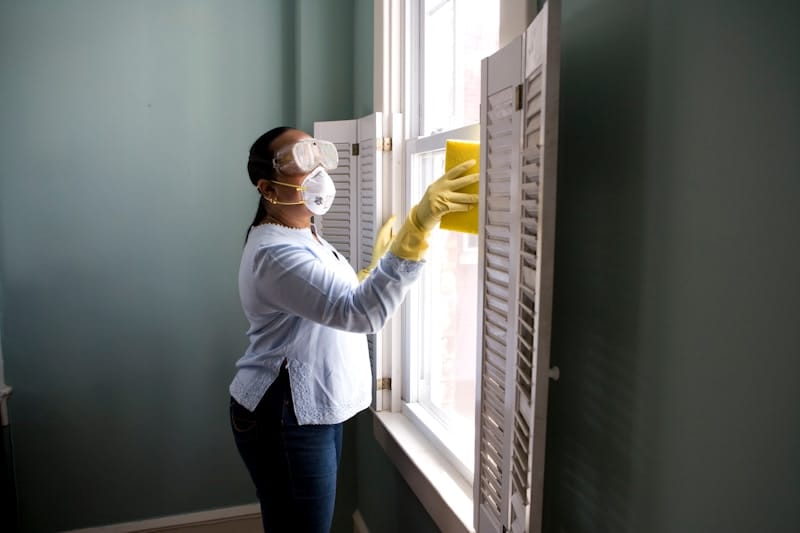
The first expat I know who got this wrong learned the hard way. She'd been paying her empleada doméstica faithfully for two years — cash every Friday, above the going rate, no complaints on either side. Then her employee slipped on a wet floor and broke her wrist. What followed was six months of back-payment demands for social security, an ARL registration fine, and a hospital bill she had to cover personally. The ARL — workplace accident insurance — hadn't been registered. She hadn't known it existed.
Hiring a domestic worker in Colombia is genuinely affordable and extremely common. But affordable doesn't mean casual. Colombia has specific legal obligations for employers of domestic workers, and the consequences of getting it wrong aren't theoretical. This guide covers the actual requirements: what to register, what to pay, how prestaciones are calculated, what dotación means, and what happens if the relationship ends.
If you're hiring someone for a one-time clean or sporadically through the year, most of this doesn't apply to you. But if you have someone coming on a regular schedule — even two days a week — you're likely their legal employer. Here's what that means.
Interna vs Externa: The First Decision That Changes Everything
Before getting into numbers, there's a structural distinction in Colombian domestic labor law that affects almost every other calculation.
An empleada externa (live-out) works set hours and goes home each day. An empleada interna (live-in) resides in your home, typically in a designated employee room with a private bathroom, and works Monday through Saturday with Sundays off. Both have the same legal entitlements — full prestaciones sociales, social security, ARL — but the live-in arrangement carries additional practical obligations. The room must be private, properly equipped, and the interna is entitled to three daily meals as part of her compensation.
In practice, most expats hire externa arrangements — someone who comes 2–5 days a week and leaves at the end of the day. That's the arrangement this guide focuses on. But if you're considering a live-in, factor in that the total cost of employment (salary + benefits + room and board) is higher than it first appears.
What You Have to Pay: Minimum Wage and Day Rates
For 2026, Colombia's salario mínimo is COP 1,423,500 per month plus a COP 200,900 subsidy de transporte, bringing the total to COP 1,624,400 for a full-time live-out worker. Full-time here means 8 hours per day, 6 days a week (48 hours weekly for domestic workers — slightly different from the general 46-hour standard).
For part-time arrangements, the calculation is proportional by days worked. If someone works 3 days a week instead of 6, the base salary is roughly half minimum wage. The legal term for this is trabajo por días, and these workers are entitled to the same proportional share of all benefits — which is where most expats underestimate the true cost.
Don't confuse the cash you hand over with the total cost of employment. With all social contributions added in (detailed below), your real cost for a full-time domestic worker runs about 35–40% higher than the base salary alone.
Social Security: EPS, ARL & Pension
This is the section most expats skip — and where most legal exposure comes from.
Health Insurance (EPS)
As an employer, you pay 8.5% of the worker's salary toward their health coverage (EPS). The employee pays 4%. You make the combined 12.5% contribution monthly through the PILA system (the unified social security payment platform). There are several platforms to make PILA payments — SOI, Mi Planilla, and others. An accountant can set this up for around COP 50,000–80,000 per month in service fees.
Pension
Employer contribution: 12% of salary. Employee contribution: 4%. You pay both portions — the 4% employee share is deducted from the worker's salary, and you add your 12% on top. Total: 16% of the base salary going toward pension each month. These go to a pension fund (AFP) — Porvenir and Protección are the two most common.
ARL: The One Everyone Forgets
The ARL (Administradora de Riesgos Laborales) is workplace accident and occupational risk insurance. It's entirely employer-paid — the worker contributes nothing. For domestic workers, the risk classification is Level I (the lowest), which means an ARL rate of approximately 0.52% of the base salary. The monthly cost is modest — around COP 7,400 for a full-time minimum-wage worker — but failing to register the ARL is one of the most common violations and carries real penalties. This is the insurance that covered — or should have covered — that broken wrist I mentioned in the intro.
Caja de Compensación Familiar: The 4% Most People Have Never Heard Of
Every employer in Colombia must register their domestic employees with a caja de compensación familiar — a regional welfare fund. The contribution is 4% of the worker's salary per month, paid entirely by the employer. In return, the worker gets access to subsidized recreation centers, vacation packages, housing subsidies, and educational programs. Major cajas include Comfenalco, Compensar, and Colsubsidio — which one depends on the region where you're located.
For a full-time worker at minimum wage, this adds roughly COP 56,900/month to your cost. For a part-time worker, it's proportional. The caja registration happens once when you first register the employment relationship — after that, contributions are included in your monthly PILA payment.
Prestaciones Sociales: The Annual Benefits Beyond Monthly Pay
Prestaciones sociales are the mandatory annual benefits built into Colombian labor law. They apply to domestic workers exactly as they apply to any other employee.
Prima de Servicios
One additional month of salary per year, paid in two installments: 15 days in June and 15 days in December. If the worker hasn't completed a full six months when each payment falls due, they receive a proportional amount. This is non-negotiable — the prima is a legal entitlement, not a bonus.
Cesantías
One month's salary per year, deposited into a cesantías fund by February 15th of the following year. Cesantías are like a severance savings account — the worker can access them for specific purposes (buying a home, education) or when employment ends. You don't pay this directly to the worker each year; it goes into their fund.
Intereses de Cesantías
An additional 12% annual interest on the cesantías balance — paid directly to the worker in January each year. For a minimum-wage domestic worker, this works out to roughly COP 170,000 per year. It's a small amount but legally required.
Vacation
15 working days (not calendar days) of paid vacation per year. For a domestic worker who comes 3 days a week, this still accrues — it's based on days worked, not calendar time. Vacation must be taken, not simply paid out in lieu (there are exceptions, but don't default to cash — let the worker take the time off).
Dotación: The Uniform Requirement Nobody Mentions
Three times a year — in April, August, and December — you're required to provide dotación to any domestic worker who earns up to two minimum wages. Dotación means work clothing and footwear appropriate for the job: typically a uniform, apron, and shoes. The standard is one full set per period, though the law specifies the items should be suitable for the work being done.
In practice, many expats handle this informally — a clothing allowance of COP 100,000–150,000 three times a year instead of buying specific items. The worker usually prefers this since it gives them choice. Either way, don't skip it. It's a legal requirement and a simple one to fulfill.
Written Contract: Required (and Simpler Than You Think)
A verbal contract is technically valid under Colombian law, but written contracts are required for any arrangement that lasts more than a month. For domestic workers, the contrato de trabajo doméstico should cover: the type of work, hours and schedule, agreed salary, workplace location, start date, and contract duration (indefinite or fixed-term).
You don't need a lawyer for a basic domestic service contract. Templates are widely available and accountants who handle domestic worker paperwork will include a contract as part of their service. The contract should be signed in two copies — one for each party.
One practical note: if you ever need to terminate employment, the written contract is what establishes the terms. Without it, disputes default to indefinite-term contract assumptions, which increases your severance liability.
Termination: What Happens When Things End
How much you owe when employment ends depends on why it's ending and how long the worker has been with you.
Termination with just cause (justa causa) — theft, serious misconduct, repeated no-shows — requires no additional indemnification beyond the normal liquidación. You still owe all accrued benefits: vacation days not taken, the proportional prima, cesantías, and their interest.
Termination without just cause (sin justa causa) — you're moving, the family is leaving Colombia, you simply don't need help anymore — triggers an indemnification payment on top of the standard liquidación. The formula: 30 days' salary for the first year of service, plus 20 days' salary per additional year (or fraction thereof). If your worker has been with you for three years and earns COP 1,423,500/month, that's 30 + 40 = 70 days of salary, or roughly COP 3,322,000.
Always process termination with a paz y salvo — a signed document confirming that all benefits have been paid and neither party has outstanding claims. Get it signed at the time of final payment. This protects both of you.
Where to Find Domestic Workers in Colombia
Word of mouth through your building's portero remains the best starting point. They typically know which cleaners already work in the building and can vouch for them. Expat Facebook groups in Medellín, Bogotá, and other cities are also reliable — someone in your neighborhood has almost certainly already vetted good options.
🇨🇴 Find Local Domestic Workers on Colombia Move
Browse free listings from domestic workers, cleaning services, and in-home caretakers across Medellín, Bogotá, Cali, and more. No placement agency fees — connect directly.
Browse Home Services →You can also search Colombia Move's home services marketplace for workers who post their own listings — rates, availability, and references included. It's free to browse and free for workers to post, which means the market rate is usually more accurate than an agency quote.
Common Mistakes Expats Make
Skipping the ARL because the monthly cost seems trivial. The registration is the point — the cost is COP 7,000/month, the liability for an unregistered workplace injury is much higher.
Treating a regular schedule as informal. If someone comes every Tuesday and Thursday, month after month, a Colombian labor court will call that employment regardless of what you call it verbally.
Forgetting the dotación deadlines. April, August, December — set calendar reminders. It's one of the obligations workers know about and remember.
Paying in cash without tracking. For your own protection, keep a simple log or do bank transfers (Nequi or Bancolombia work perfectly) so there's a payment record. In a dispute, you want proof of what you paid and when.
Frequently Asked Questions
❓ Do I need to register a domestic worker if they only come once a week?
Technically, Colombian law requires social security registration for domestic workers who work on a regular basis, even part-time. Once a week on a consistent ongoing schedule falls into that category. In practice, many one-day-per-week arrangements remain informal — but if your worker gets injured on the job, you bear the liability. ARL registration is the highest-priority item even for occasional arrangements.
❓ How much does it cost in total to employ a full-time domestic worker?
For a full-time empleada earning minimum wage (COP 1,423,500/month in 2026), the true all-in cost including social security (EPS, pension, ARL), caja de compensación, and annualized prestaciones comes to approximately COP 2,000,000–2,100,000 per month — about 40% above base salary. The exact figure depends on whether you're also providing the transport subsidy (required for live-out workers).
❓ What's the difference between a trabajadora por días and a full employee?
A trabajadora por días typically works for multiple employers and manages her own social security contributions. You pay per day worked, not a monthly salary. This is the most common arrangement for light cleaning help (1–2 days per week). A full domestic employee works exclusively for you on a fixed schedule — at that point you take on full employer responsibilities. The line isn't always clean, which is why a clear written agreement matters.
❓ Can I terminate a domestic worker without giving a reason?
Yes — Colombia allows termination without cause for indefinite contracts. But you'll owe indemnification: 30 days' salary for the first year of service, then 20 days per additional year. Always process a formal liquidación and get a paz y salvo signed when the employment ends.
❓ Where do I make social security payments for my domestic worker?
Through the PILA system (Planilla Integrada de Liquidación de Aportes). You can pay via Mi Planilla, SOI, or through your bank. Most expats hire a local accountant (contador) for COP 50,000–80,000/month to manage this — it handles registration, monthly PILA submissions, and annual filings.
If you're navigating the paperwork for the first time, the Colombia Move community is a good place to get specific answers — other expats and Colombians have dealt with the same questions. Drop your question at colombiamove.com/comunidad.
Have experience hiring domestic help in Colombia? Share what you wish you'd known earlier in the comments — the practical details always help other expats more than the official explanations do.
🇨🇴
Join Colombia Move — free bilingual marketplace
Jobs, services, housing, classifieds. Free to post, no commissions, no middlemen.
Sign up free






Comments
Loading comments...