
20 Reasons to Move to Colombia (and 5 Reasons Not To)
Colombia has won over hundreds of thousands of expats — but it's not for everyone. Here's the honest case for moving, and the honest case against.
I get asked some version of the same question at least once a week: “Is Colombia actually worth moving to, or is it just hype?” After living here full-time, I can give you the real answer — it’s both. Colombia is one of the most rewarding, affordable, and genuinely addictive places in the world to live. It will stretch your idea of what daily life can look and feel like. And yes, it will also test your patience in ways you didn’t see coming.
This list is my attempt at genuine honesty. Not the highlight-reel version you see on expat YouTube, and not the doom-scrolling safety warnings from people who have never been. Just the real stuff — 20 reasons Colombia might be the best decision you ever make, and 5 reasons it might not be the right fit for you.
I've watched people arrive in Medellín, fall completely in love with Colombia, and never leave. I've also watched people arrive with big expectations and burn out within six months. The difference almost always comes down to knowing what you're actually walking into. Read this first.
20 Reasons to Move to Colombia
1. The Weather in Medellín Is Legitimately Perfect
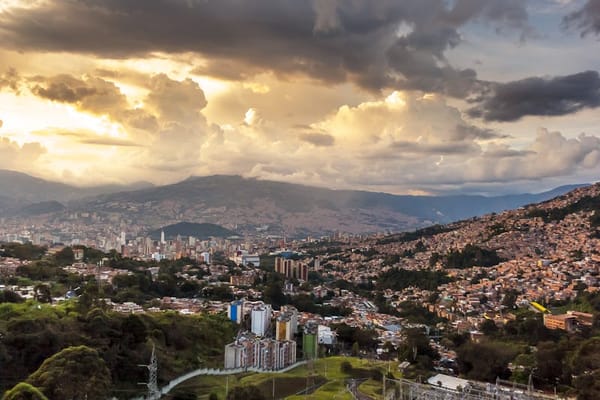
Medellín sits at about 1,500 meters above sea level, which gives it what locals proudly call the City of Eternal Spring. Average temperatures run 22–24°C (72–75°F) year-round — no central heating, no air conditioning. You step outside in December and it feels like a warm spring afternoon. Bogotá runs cold (around 14°C, frequently overcast), and coastal cities like Cartagena and Santa Marta are a sweaty 32°C. But in Medellín or the coffee region, the climate alone is worth the move.
2. The Natural Variety Is Hard to Beat Anywhere
Colombia is the only country in South America with coastlines on both the Pacific Ocean and the Caribbean Sea. Add the Andes mountains, the lush coffee-growing highlands, the Colombian Amazon, and the vast Los Llanos plains, and you get a geography that is almost absurdly diverse. On a long weekend from Medellín, you can be at a Caribbean beach, hiking Tayrona National Park, exploring the walled streets of Cartagena, or riding horses in Salento. Almost no country of similar size comes close to this variety.
3. The Food Is Incredible and Costs Almost Nothing
A full menú del día lunch — soup, main course, juice, and sometimes dessert — runs 15,000 to 22,000 COP, roughly $3.50 to $5 at current exchange rates. Arepas, bandeja paisa, sancocho, fresh tropical fruit you've never encountered before — the local food is genuinely delicious. The restaurant scene in Medellín and Bogotá has also exploded in quality over the past decade. Sushi, Korean BBQ, Peruvian ceviche, farm-to-table Colombian fusion — all at prices that feel impossible compared to back home.
4. Colombians Are Among the Warmest People You'll Ever Meet
I've traveled through most of Latin America and Colombia genuinely stands out. People here are curious about where you're from, will go out of their way to help a stranger, and celebrate daily life with an energy that's hard not to catch. There's a word here — parce — which means something between 'buddy' and 'mate,' and the ease with which strangers use it with you within minutes of meeting says everything about the cultural warmth. Colombians have been through a lot as a country, and it's made them resilient and present in a way that Western expats often find deeply refreshing.
The Financial Case for Moving to Colombia
5. Your Dollar Goes Dramatically Further
The Colombian peso has weakened significantly against the dollar over the past several years, meaning your USD or EUR purchasing power is near historical highs. As of 2025–2026, one US dollar buys roughly 4,000 to 4,200 COP. A comfortable full expat lifestyle in Medellín — nice apartment, eating out regularly, gym membership, weekend trips — can cost as little as $1,500 to $2,000 per month. Compare that to a similar lifestyle in Barcelona, Austin, or even Bangkok. The value is exceptional.
6. Rent That Would Make Your Friends Back Home Cry
A furnished, modern one-bedroom apartment in a safe neighborhood in Medellín — think Laureles, Envigado, or Sabaneta — rents for $400 to $700 per month. A two-bedroom with a city view, gym, and rooftop pool in El Poblado can come in under $1,000. These are real prices — not Airbnb tourist rates, which run significantly higher — found through local channels, real estate agents, and Facebook groups. For a detailed category-by-category breakdown of what to budget, the Medellín cost of living guide is essential reading.
7. Eating Out Is Affordable Enough to Be a Daily Habit
Back home, eating out every day would drain a budget fast. In Colombia, many expats eat out for virtually every meal and still spend less than cooking at home in North America would cost. A solid local restaurant lunch is under $5. Dinner at a nice sit-down place with drinks rarely breaks $25 for two people. The corner tienda where the neighborhood buys snacks, coffee, and basics? You're spending maybe 5,000 COP for a fresh-squeezed juice and a pastry.
8. Domestic Travel Within Colombia Is Cheap and World-Class
Bogotá to Medellín on Avianca or Latam — often under $60 return if you book early. Cartagena for a long weekend? Add $80 round trip from Medellín. The country's bus network through Flota and Bolivariano reaches the coffee region, Guatapé, Barichara, and hundreds of beautiful towns for a few thousand pesos. For a country this size with this much diversity, domestic travel is shockingly affordable and endlessly rewarding.
Practical Reasons That Actually Matter
9. The Time Zone Is Perfect for Remote Workers
Colombia runs on UTC-5 year-round with no daylight saving time changes — ever. For anyone working with US clients or employers, this is ideal. You're aligned with Eastern time for most of the year and only one to three hours behind the West Coast. Compare this to grinding from Southeast Asia, where you're either working at midnight on US calls or asking clients to restructure their entire day for you.
10. A Real Path to Residency and Citizenship
Colombia has some of the most accessible residency pathways in Latin America. The pensionado visa requires only about $750/month in pension income. The digital nomad visa grants two years with a qualifying remote work contract. After five continuous years of legal residency, you can apply for citizenship — and Colombia allows dual nationality, so you give nothing up. For the complete paperwork breakdown, the full Colombia visa guide covers every visa type and requirement in detail.
11. Healthcare Is Good and Dramatically Affordable
Private healthcare in Colombia is genuinely solid — well-trained doctors, modern clinics in the major cities, and costs that are a fraction of uninsured care in the US. A specialist consultation at a private clinic in Medellín typically runs 80,000 to 150,000 COP ($20–35). For expats not yet enrolled in the Colombian EPS system, international health coverage is a smart bridge.
12. You Can Learn Spanish Fast Here
Colombian Spanish — particularly the Bogotano and Paisa accents — is widely considered the clearest and most neutral in Latin America, making it the easiest for learners to understand. Combined with full daily immersion, most committed expats reach functional conversational Spanish in three to six months. Medellín and Bogotá have excellent language schools, active intercambio groups where locals want to practice English with you, and an expat culture that genuinely rewards using Spanish over defaulting to English.
13. The Expat and Digital Nomad Infrastructure Is Mature
Medellín especially has built serious infrastructure for remote workers: dozens of high-quality coworking spaces, fiber internet in modern apartments, a WhatsApp-based culture for everything from restaurant bookings to apartment hunting, and a massive, active expat community that shares tips and warnings constantly. The city has been consciously courting remote workers for years, and it shows. Fiber speeds of 100–500 Mbps are standard in the better buildings.
The Intangibles — Why People Stay
14. Medellín's Transformation Story Is One of the Great Urban Comebacks
Twenty-five years ago, Medellín was the most dangerous city in the world. Today it has won global urban innovation awards, built a world-class metro and cable car system that transformed its hillside comunas, and cultivated one of the most educated, entrepreneurial young populations in Latin America. Living here, you feel that energy constantly — a city that knows it came back from the brink and is determined to keep building something genuinely worth having. It's inspiring in a way that's hard to articulate until you've experienced it.
15. The Pace of Life Resets What You Think Is Normal
Most expats who've been here longer than six months say the same thing: the pace is different here in a way that changes you over time. Lunch actually stops for an hour. The weekend actually belongs to the weekend. People stop to talk on the street. Parks fill up on Sunday afternoons. It sounds small until you've spent years at full corporate-burnout velocity and then find yourself drinking tinto at a corner café on a Tuesday morning, watching the world pass by, and feeling completely fine about it.
16. The Expat Community Is Large, Active, and Welcoming
Colombia — Medellín especially — has one of the largest and most organized expat communities in Latin America. Facebook groups with tens of thousands of members share apartment leads, doctor recommendations, visa tips, weekend trip ideas, and warnings about current scams. Meetup groups, language exchanges, sports leagues, and organized social events mean you can build a real social life within weeks of arriving, even if you know no one. For a city-by-city breakdown of which Colombian city actually fits your lifestyle,
17–20. The Cultural Richness, the Music, the Celebrations, and the Layers
The cultural richness of Colombia deserves its own list. The salsa scene in Cali. The Feria de las Flores in Medellín every August. The coffee culture in Manizales and Salento. The colonial architecture in Barichara and Villa de Leyva. The music is everywhere and it is genuinely good. The sense of celebration is authentic, not performed for tourists. Colombia also punches well above its weight on gastronomy diversity, on the quality of its craft markets and art scenes, and on the sheer visual beauty of its cities and countryside. For most expats, the longer they stay, the more layers they find — and the harder it becomes to imagine going back.
5 Honest Reasons NOT to Move to Colombia
1. Safety Concerns Are Real — Not Something You Can Ignore
Let me be straight: Colombia has real crime. Petty theft, motorcycle-based phone snatching, and scopolamine (the drug criminals use to incapacitate victims) are genuine risks — particularly in certain areas of Medellín and Bogotá. Most expats who live here long-term have been robbed at least once, usually a phone grab in the street, usually in the first year before they learned where not to go and what not to flash. This is manageable with experience and habits. It is not something to wave away. Before moving, reading Is Medellín Safe? thoroughly is time well spent.
2. Spanish Is Non-Negotiable for Real Life Here
You can survive in El Poblado or the tourist zone of La Candelaria without Spanish. You cannot really live in Colombia without it. Banking, bureaucracy, medical appointments, apartment hunting through local channels, dealing with utility companies and service providers — all of it requires Spanish, and the bureaucratic vocabulary is specific and unforgiving. If you're not willing to commit to genuinely learning the language — not just taking a few casual classes — Colombia will stay at arm's length in ways that make daily life persistently frustrating.
3. The Bureaucracy Will Test Your Patience on a Regular Basis
Getting your cédula de extranjería, opening a Colombian bank account, registering for EPS health insurance, dealing with Migración Colombia — these processes are slow, documentation-heavy, require everything in precise formats, and regularly reject you for reasons that feel arbitrary and unexplained. Plan for every bureaucratic task to take two to four times longer than you expect. The how to get your cédula guide walks you through the steps, but know going in that 'simple' processes in Colombia are rarely simple.
4. Infrastructure Inconsistencies Will Catch You Off Guard
Medellín and Bogotá have generally reliable infrastructure in the better neighborhoods. Once you move to secondary cities or older buildings, that reliability drops. Rolling power outages happen in some regions. Water pressure is inconsistent in older construction. Roads outside the main cities can be genuinely rough. The healthcare system, while excellent in the major cities, is limited in rural and small-town Colombia. If you're the type of person who genuinely cannot handle things not working on schedule, Colombia will test you — frequently.
5. Political and Economic Uncertainty Adds Real Long-Term Risk
Colombia's current political environment has introduced meaningful uncertainty for foreign property owners and longer-term investors. Policy shifts around wealth taxes, property rights discussions, and economic regulation have made some long-term expats more cautious about significant asset commitments here. The peso is volatile, the economy is exposed to global commodity prices, and political polarization is high. None of this makes Colombia unlivable — millions of people thrive here — but it is a legitimate factor in long-term financial planning that deserves honest consideration, not dismissal.
So, Should You Move to Colombia?
Colombia is the right move if you want to live well on a reasonable budget, you're genuinely excited by a country that is still figuring itself out, you're committed to learning Spanish, and you have the resilience for the bureaucratic friction that comes with expat life. It's the wrong move if you need a fully smooth and predictable daily environment, if Spanish feels like a non-starter, or if safety uncertainty is a real deal-breaker for you rather than something you can manage with habits and situational awareness.
For most people who make the jump with realistic expectations, Colombia becomes more than they expected — in both the good ways and the hard ways. That's exactly what makes it worth the move.
If you're an American specifically weighing the decision, the full guide to moving to Colombia as an American covers the practical and legal side in depth — visas, finances, what to expect in the first year.
Frequently Asked Questions About Moving to Colombia
❓ Is Colombia a good country to move to?
Yes — Colombia consistently ranks among the top expat destinations in Latin America for quality of life, cost of living, climate, and community. The main tradeoffs are safety considerations and bureaucratic friction, both of which are manageable with preparation and realistic expectations. The expat community is large, the infrastructure in the major cities is solid, and the lifestyle rewards are genuinely significant.
❓ How much money do you need to move to Colombia?
A comfortable expat lifestyle in Medellín typically costs $1,500 to $2,500 per month. You can live more modestly on $1,000 to $1,200, but quality of life drops noticeably below that threshold. Budget an additional $2,000 to $5,000 for setup costs — first and last month's rent, bureaucratic fees, initial furnishings, and the inevitable surprises of the first few weeks.
❓ Is it safe to live in Colombia as a foreigner?
Colombia has improved dramatically in safety over the past 25 years. Expats live safely in cities like Medellín, Bogotá, Cartagena, and Cali by following basic security habits: keeping phones off the street, sticking to well-lit areas at night, and avoiding certain neighborhoods. Petty crime remains a real and ongoing risk. Violent crime specifically targeting foreigners is rare but not unheard of. Most long-term expats consider the risk manageable and well worth the tradeoff.
❓ Can Americans move to Colombia permanently?
Yes. Americans can move to Colombia permanently through several visa pathways. The pensionado visa (around $750/month in verified pension or passive income) is the most common for retirees. The digital nomad visa covers remote workers for up to two years. After five consecutive years of legal residency on most visa types, you can apply for Colombian citizenship — and Colombia allows dual nationality, so you keep your US passport.
❓ What are the biggest challenges of living in Colombia?
The most consistent challenges expats report are: the Spanish language barrier in bureaucracy and daily life, the patience required for administrative processes (banking, visas, utilities), adjusting to Colombia's safety norms and staying alert, infrastructure inconsistencies outside the major cities, and the political and economic uncertainty of the current era. None of these are dealbreakers for most people, but they're real — and the expats who thrive here are the ones who went in knowing about them.
🇨🇴 Colombia Move
Bolsa de empleo y servicios gratuita para Colombia. Publica o encuentra oportunidades en Medellín, Bogotá, Cartagena y más.
Visitar Colombia Move →Your Turn
Have you already made the move to Colombia — or are you still weighing the decision? Drop your experience in the comments below. If there's a reason I missed — pro or con — I want to hear it. If you found this breakdown useful, share it with someone who's seriously thinking about making the jump. It's the kind of honest list I wish I'd found before I booked my own flight. And if you want more like this in your inbox, subscribe to the Colombia Move newsletter at the bottom of this page.
🇨🇴
Get the next Colombia guide in your inbox
Join 10,000+ expats and future expats. No spam, just useful guides.



Comments
Loading comments...