
Colombia's Estrato System Explained: What Every Expat Needs to Know
Colombia assigns every residential property an estrato—a 1–6 socioeconomic tier that determines your utility bills and shapes your neighborhood. Here's what it means and why it matters.


The first time I looked at a Colombian lease agreement, I saw the words "Estrato 3" listed under property details and had no idea what it meant. My landlord tried to explain—something about utilities, subsidies, social policy—and I was even more confused than before. Three years and two apartments later, I finally have a proper grip on the system. It's one of the more ingenious pieces of social infrastructure in Colombia, and it directly affects your monthly costs from day one.
Colombia's estrato system divides all residential properties into six socioeconomic tiers. It determines how much you pay for electricity, water, and gas; shapes the character of neighborhoods; and signals general socioeconomic standing—even though the classification belongs to the building, not to you personally. Understanding it is non-negotiable if you're renting an apartment, comparing neighborhoods, or just trying to make sense of the number printed at the top of your utility bill.
Here's the full breakdown: what each estrato means, how it affects your monthly costs, the differences between cities, and the parts that regularly confuse foreigners.
What Is the Estrato System?
"Estrato socioeconómico" is Colombia's official method of classifying residential properties on a 1–6 scale. It was established by Law 142 of 1994—the Ley de Servicios Públicos Domiciliarios—and each municipality is responsible for assigning and updating the classifications in its territory.
The core mechanism is a cross-subsidy. Households in Estratos 1, 2, and 3 receive discounts on public utilities (electricity, water, natural gas, and waste collection). Households in Estratos 5 and 6 pay a surcharge above market rate. Estrato 4 is the neutral tier—market rate, no discount, no surcharge. The extra money collected from high-estrato properties funds the subsidies for low-estrato ones.
Classifications are based on the physical characteristics of the property and its block: construction quality, facade type, street condition, green space access, proximity to commercial zones. Assessments happen periodically, but in practice many neighborhoods go years—sometimes decades—without a formal update. That lag creates some interesting anomalies, which I'll get to.
The Six Estratos, Explained
Knowing which estrato you're renting in changes your budget math. Here's what each tier actually looks like on the ground:
Estrato 1 — The lowest tier, covering informal settlements, hillside comunas (like parts of Comunas 1–3 in Medellín), and rural-urban fringes. Utility subsidies are at their maximum. Rent is minimal, but infrastructure and amenities tend to be basic. Very few expats rent here long-term.
Estrato 2 — More established working-class neighborhoods with better services than Estrato 1. Still significantly subsidized. In Medellín this includes much of Robledo and parts of Itagüí. In Bogotá, large sections of Engativá and Kennedy.
Estrato 3 — Where the majority of Colombians live. Solidly built, decent public services, usually close to Metro or Transmilenio lines. Parts of Envigado, older sections of Laureles, much of Suba in Bogotá. Good value for expats who want to spend less and live in an authentic neighborhood.
Estrato 4 — Entry point for upper-middle class. Market-rate utilities, no subsidies, no surcharges. Most of the neighborhoods popular with expats fall here: central Laureles, Chapinero, parts of El Poblado, Chico in Bogotá. This is where you'll find furnished apartments marketed to internationals.
Estrato 5 — Upper-middle class. Newer construction, 24-hour doormen (portería), covered parking, rooftop pools. Parts of El Poblado's newer buildings, Cedritos and Usaquén in Bogotá. Utility bills start to climb noticeably.
Estrato 6 — The highest tier. El Poblado's Llanogrande corridor, Bogotá's La Cabrera and Chicó Reservado, Cali's Ciudad Jardín. Utility surcharges add up, but most residents don't feel the pinch relative to what they're already spending.
How Estrato Affects Your Utility Bills
This is where the system becomes real money. Take electricity as the clearest example. In an Estrato 3 apartment in Medellín, a typical monthly EPM bill runs around 60,000–90,000 COP (roughly $15–22 USD). The equivalent apartment in Estrato 5—same square footage, same consumption—could easily run 180,000–280,000 COP ($45–70 USD). Not because you're using more power, but because the per-unit rate is stratified.
Water and sewage follow the same structure. Natural gas is a smaller cost overall but is also tiered. Waste collection fees appear on your utility bill (usually with EPM or your city's provider) and are likewise scaled by estrato.
The practical implication: if you're comparing two apartments at similar rents—one Estrato 3, one Estrato 5—budget an extra 100,000–200,000 COP per month for the higher-tier place. Over a full year, the utility difference alone can reach 1.5–2 million COP. That's not nothing.
One nuance worth flagging: new developments, especially in mixed-use zones, sometimes carry a different estrato classification than older buildings on the same block. It's not unheard of for a brand-new Estrato 4 tower to sit next to a 1980s Estrato 3 building. Always ask to see a recent utility bill from the specific apartment before signing a lease—don't assume based on the address alone.

Estrato and Rent: What to Expect
Higher estrato correlates with higher rent, but it's not a direct relationship. An Estrato 4 apartment in a quiet street in Chapinero will cost less than an Estrato 4 apartment in Zona Rosa. Location within the estrato tier matters just as much as the tier itself.
What estrato does reliably predict is building quality and service standards. Estrato 5–6 buildings almost universally have 24-hour portería, backup generators, covered parking, and modern fire safety systems. Estrato 3 buildings are hit-or-miss. Some are beautifully maintained; others are functionally identical to an Estrato 2 building despite the classification.
I've watched foreigners overpay for Estrato 5 apartments without accounting for the utility costs, then wonder why their monthly budget is higher than expected. If you're cost-conscious, an Estrato 3 or 4 apartment in Envigado, Laureles, or Bogotá's Chapinero Occidental might deliver better value per peso than a flashier Estrato 5 unit in El Poblado.
When transferring money to pay rent, Remitly consistently gives better exchange rates than bank wires—often 2–3% better, which adds up on monthly rent payments.
Estrato by City: Medellín, Bogotá, and Cali
Medellín has one of the most spatially polarized estrato landscapes in the country. El Poblado is almost exclusively Estrato 4–6. The hillside comunas to the north and west are predominantly Estrato 1–2. The middle zones—Laureles, Envigado, parts of El Centro—are where you find the most Estrato 3–4 mix, and where most long-term expats end up.
Bogotá is larger and more fragmented. Usaquén, northern Chapinero, and the far north tend toward 4–6, but you'll frequently find Estrato 3 blocks sitting beside Estrato 5 ones—an adjacency that would be unusual in Medellín's more segregated geography. This mixing can work in your favor: a well-located Estrato 3 apartment in northern Bogotá can be a genuine steal.
Cali skews lower on average. Neighborhoods that would be classified Estrato 4 in Medellín often land at Estrato 3 in Cali, partly due to differences in municipal assessment methodology and partly because the overall wealth distribution differs. Barrio Granada and San Antonio, popular with expats, typically sit at Estrato 3–4. Your utility bills in Cali will generally be lower than the same-tier apartment in Medellín—not because of the estrato, but because Cali is flatter and has lower energy consumption needs.
In smaller cities—Manizales, Pereira, Bucaramanga—the system operates the same way, but Estrato 5–6 properties are rare. Most of the expat-friendly rental stock falls in the 3–4 range.
How to Check the Estrato of Any Address
Your landlord is legally required to disclose the estrato—it appears on all utility contracts and on the lease itself. But you can also verify it yourself before you commit to anything.
For Medellín, the GeoMedellín portal (geomedellin.gov.co) lets you enter any address and see its classified estrato. Bogotá has a similar lookup at datosabiertos.bogota.gov.co. Most major municipalities have an online query tool; searching "[city name] consulta estrato" in Google will usually find the right one.
The simplest check: ask to see a recent utility bill from the apartment. The estrato is printed right on it—look for the word "Estrato" followed by the number, usually near the top of the bill. If a landlord refuses to show you a bill, that's worth noting.
What the Estrato System Doesn't Mean
The estrato belongs to the building, not to you. Moving into an Estrato 6 building doesn't classify you as Estrato 6—Colombia doesn't label people this way. There's no estrato associated with your cédula de extranjería or any immigration document. The worry some foreigners have about being "assigned" an estrato is a misunderstanding of how the system works.
It's also not a reliable quality-of-life proxy on its own. An Estrato 4 building renovated in 2022 might be significantly nicer than an Estrato 5 building that hasn't seen maintenance since 2001. Walk the property, check the hallways, test the elevator, run the hot water. The number is a starting point, not a guarantee.
Finally: reclassification happens. Parts of Chapinero in Bogotá have gentrified significantly but carry older, lower estrato classifications that haven't been updated. This means you might rent an apartment at Estrato 3 utility rates in a neighborhood that functionally feels like Estrato 5. For cost-conscious renters, those zones are worth seeking out.
📖 Keep Reading
Frequently Asked Questions
❓ What does estrato mean in Colombia?
Estrato is a 1–6 socioeconomic classification assigned to residential properties by each municipality. It determines how much residents pay for public utilities—Estratos 1–3 get subsidized rates, Estrato 4 pays market rate, and Estratos 5–6 pay a surcharge. It's a property classification, not a personal one.
❓ What estrato should I look for as a foreigner?
Most expats end up in Estrato 3–5. Estrato 4 is the sweet spot for many: solid building quality, no utility surcharges, and a wide selection of furnished rentals. Estrato 3 is worth considering in well-established neighborhoods if you want to keep your monthly costs down. Estrato 5–6 is comfortable but utility bills can be surprisingly high.
❓ Does estrato affect visa applications or legal status?
No. Estrato is a property classification with no connection to immigration status, visa eligibility, or any legal rights in Colombia. You can live in any estrato regardless of your visa type.
❓ Can my apartment's estrato change after I move in?
Yes, though it's uncommon. Municipalities can reclassify neighborhoods, usually upward when an area gentrifies. If it happens, your utility rates will increase. This rarely happens mid-lease, and some rental contracts include clauses about it—worth reading before you sign.
❓ What's the practical difference between estrato 3 and estrato 4?
Estrato 3 properties receive a utility subsidy (meaning discounted electricity, water, and gas). Estrato 4 pays market rate—no subsidy, but also no surcharge. The rent gap between the two varies by city and neighborhood. In some areas it's significant; in others, the difference in rent is smaller than you'd expect, making Estrato 3 genuinely good value.
🇨🇴 Questions About Renting in Colombia?
Ask the expat community—someone's already figured out the neighborhood you're eyeing.
Ask the Community →Have you dealt with a surprise estrato reclassification, or found a great deal in an underrated estrato? Drop it in the comments—real-world data points are way more useful than generalizations.
🇨🇴
Join Colombia Move — free bilingual marketplace
Jobs, services, housing, classifieds. Free to post, no commissions, no middlemen.
Sign up free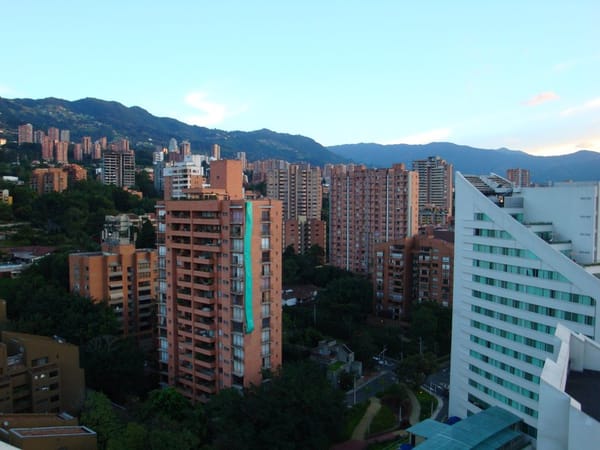





Comments
Loading comments...