
Colombia Tax Residency: The 183-Day Rule Every Expat Must Understand (2026)
Do you owe taxes in Colombia? The 183-day rule explained — how tax residency works, what income gets taxed, how to count your days, and strategies to stay compliant in 2026.

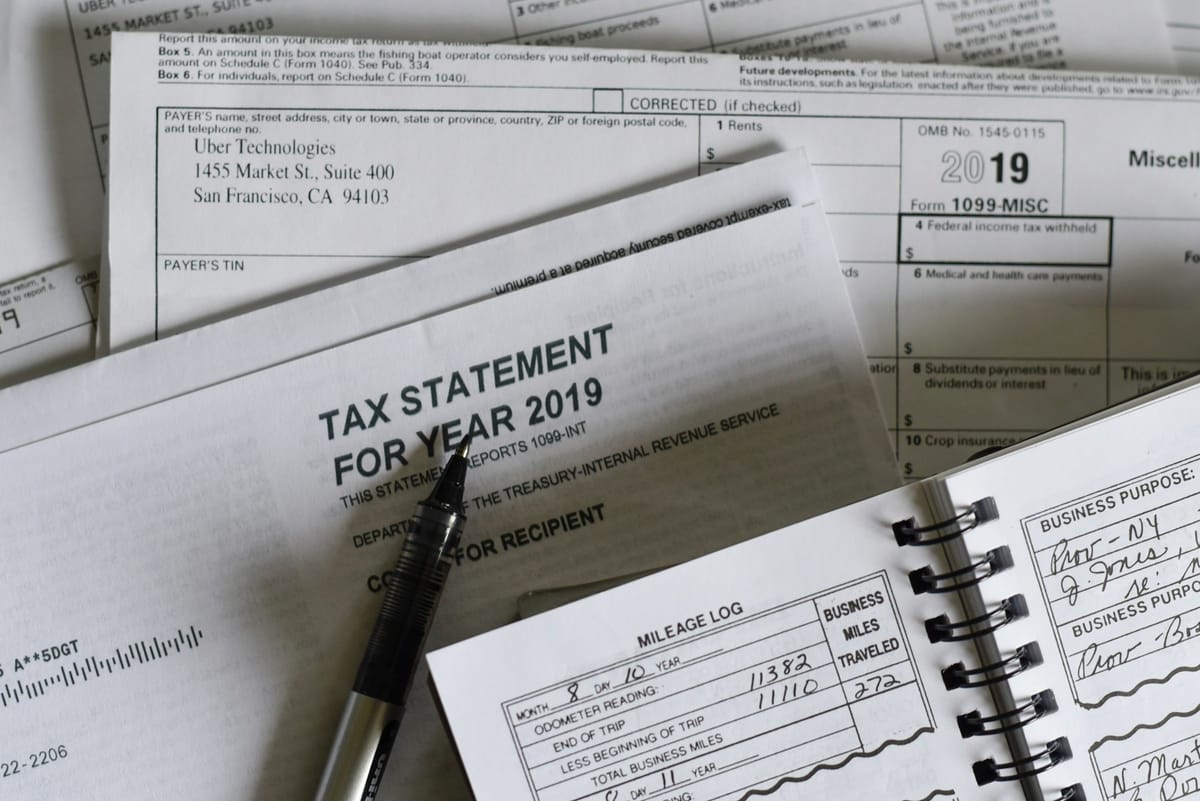
Colombia is one of the best places in the world to live as an expat — low cost of living, incredible cities, and a warm culture. But there's a tax trap waiting for anyone who stays too long without understanding the rules. Get familiar with the 183-day rule before it catches you off guard.
Why This Matters More Than You Think
Most expats move to Colombia thinking about visas, neighborhoods, and Spanish classes. Taxes? That's a problem for later. But "later" has a way of arriving fast — especially when you discover that Colombia taxes your worldwide income once you become a tax resident. Not just what you earn in Colombia. Everything.
The surprise isn't the tax system itself — it's that residency can happen accidentally. Spend enough days in Colombia and you're in, whether you intended it or not. Unlike some countries where you have to affirmatively register, Colombia's tax residency is triggered automatically by physical presence. DIAN (Colombia's tax authority) tracks this. Migración Colombia tracks this. And if you're not tracking it yourself, you may owe taxes — plus penalties — without even realizing it.
This guide breaks down exactly how the system works, how to count your days correctly, and what to do if you're already over the threshold. Whether you're a digital nomad on a visa, a retiree, or a remote worker settling in Medellín, understanding this rule protects you.

📋 The 183-Day Rule Explained
Colombia's tax residency rule is straightforward in concept but easy to misunderstand in application. Under Article 10 of Colombia's Tax Code, you become a Colombian tax resident if you spend 183 days or more in Colombia within any rolling 365-day period — or within a single calendar year. Whichever threshold you hit first is what counts.
Here's where people get tripped up: the days don't have to be consecutive. They're cumulative. You could spend three months in Medellín, fly back to your home country for six weeks, return to Cartagena for another two months, and still cross the 183-day mark without ever having a single unbroken six-month stay. The clock keeps running on a rolling basis.
A few critical details that often get overlooked:
Days of entry and exit both count. Even if you land at 11 PM, that's a full day. Even if you leave at 6 AM, that's a full day. There's no half-day credit.
Partial days are full days. If you're physically present in Colombia at any point during a calendar day, that day counts toward your 183.
The calendar year threshold is separate. Even if you haven't hit 183 days in any rolling 365-day window, if you accumulate 183+ days within January 1 to December 31 of a single year, you're a tax resident for that year.
The practical implication: if you're spending significant time in Colombia, you need to be actively counting. Don't assume you're safe because you "haven't been here that long."

💰 What Gets Taxed — Resident vs. Non-Resident
The tax exposure gap between resident and non-resident status is enormous. Here's the breakdown:
Non-resident: You only pay Colombian tax on Colombian-source income. This means rental income from Colombian property, salary from a Colombian employer, or income earned from work performed physically in Colombia. Your foreign freelance income, your U.S. investments, your European rental properties — none of that is taxable in Colombia while you're a non-resident.
Tax resident: Colombia taxes your worldwide income. That's your remote work salary paid by a U.S. company, your freelance clients in Europe, your investment dividends, capital gains from selling property anywhere in the world, and rental income from any country. Everything is on the table.
Tax rates are progressive, running from 0% on low incomes up to 39% at the highest bracket. The rates are calculated in UVT (Unidad de Valor Tributario), Colombia's inflation-adjusted tax unit. For 2026, 1 UVT = approximately 49,799 COP (roughly $12 USD). This means the brackets shift slightly each year in peso terms, but the structure stays consistent.
One important nuance: Colombia offers various deductions for residents — health contributions, pension contributions, certain housing costs — that can reduce your taxable income meaningfully. A good Colombian accountant will know how to apply these correctly.
🔢 How to Count Your Days (And Prove It)
Day counting isn't just a mental exercise — you need documentation. The Colombian government has two primary systems for tracking your physical presence: immigration stamps in your passport (for land crossings) and electronic records maintained by Migración Colombia for all entry and exit movements.
The most important tool available to you is the Certificado de Movimientos Migratorios. You can request this official document from Migración Colombia — either in person at their offices or online through their portal. It shows every recorded entry and exit from Colombia tied to your passport. This is what DIAN would use to verify your days if audited, and it's what you should use to verify your own count proactively.
Practically speaking, the best approach is to maintain your own rolling spreadsheet. Log every entry and exit date, note the method (air, land border, etc.), and calculate your running total over every 365-day window. It sounds tedious but takes about five minutes per trip. Compare your records against your Certificado de Movimientos Migratorios at least once a year — discrepancies do happen, especially at busy land borders where stamps are sometimes missed.
The most common mistake expats make: assuming "183 consecutive days" when the law clearly says cumulative. That misunderstanding has cost people thousands of dollars in unexpected tax bills.
⚠️ The Trap: Dual Tax Residency
Here's where things get genuinely complicated for Americans (and many other nationalities). The United States taxes its citizens on worldwide income regardless of where they live — you're always a U.S. tax resident as long as you hold a U.S. passport. If you also become a Colombian tax resident, you're now obligated to file taxes in both countries on your worldwide income.
The U.S. provides two main mechanisms to avoid double taxation: the Foreign Earned Income Exclusion (FEIE), which lets you exclude up to approximately $130,000 of foreign-earned income from U.S. taxes in 2026, and Foreign Tax Credits (FTC), which allow you to offset U.S. tax liability with Colombian taxes already paid. These tools help significantly — but they don't eliminate all obligations. Investment income, self-employment taxes, and certain passive income can still generate a U.S. tax bill even after applying these mechanisms.
British expats face a similar issue — the UK uses a Statutory Residence Test to determine tax residency, and becoming a Colombian tax resident doesn't automatically release you from UK obligations depending on your ties to the UK.
The bottom line: if you're American, British, or from another country with aggressive worldwide taxation and you're approaching or over the 183-day threshold in Colombia, you need a cross-border tax specialist — someone who understands both systems. This is not a situation for a general accountant. You can find more context on the financial landscape in our guide to making a living in Colombia as an expat.
🛡️ Strategies for Managing Your Tax Exposure
You have more control over this than you might think. Here are the practical strategies expats actually use:
Stay under 183 days. The simplest approach for digital nomads who want to enjoy Colombia without triggering residency. Spend 4-5 months, leave for a significant stretch, return later. Track carefully so you never accidentally cross the threshold. This is a very common strategy in the expat nomad community.
Understand Colombia's tax treaties. Colombia has Double Taxation Agreements (DTAs) with Spain, Switzerland, Chile, Canada, Mexico, India, South Korea, Portugal, the Czech Republic, and others. These treaties help prevent true double taxation for residents of those countries. Notably, Colombia does not have a DTA with the United States or the United Kingdom, which is why Americans and Brits face the most complex dual-residency situations.
Hire a Colombian contador. A qualified Colombian accountant typically costs between $50-$150 USD per month for expat clients. For what they save you — in properly applied deductions, correct filing, and avoided penalties — this is one of the best investments you can make. They handle your RUT registration, your DIAN filings, and can advise on structuring your income efficiently. Don't DIY Colombian taxes if you have complex international income.
Keep meticulous travel records. Board passes, hotel receipts, credit card statements from other countries — anything that corroborates your physical presence outside Colombia. If you're ever audited, documentation is your defense.
If you're considering buying property in Colombia, also read our guide on Colombia's wealth tax for foreign property owners — there are additional obligations that interact with your residency status.

📊 Colombia Tax Brackets 2026
Colombia's income tax is calculated in UVT (Unidad de Valor Tributario). For 2026, 1 UVT = approximately 49,799 COP (~$12 USD at current rates). The progressive brackets for tax residents on ordinary income are:
| Taxable Income (UVT) | Approx. USD Range | Marginal Rate |
|---|---|---|
| 0 – 1,090 UVT | $0 – ~$13,080 | 0% |
| 1,090 – 1,700 UVT | ~$13,080 – ~$20,400 | 19% |
| 1,700 – 4,100 UVT | ~$20,400 – ~$49,200 | 28% |
| 4,100 – 8,670 UVT | ~$49,200 – ~$104,040 | 33% |
| 8,670 – 18,970 UVT | ~$104,040 – ~$227,640 | 35% |
| 18,970 – 31,000 UVT | ~$227,640 – ~$372,000 | 37% |
| 31,000+ UVT | $372,000+ | 39% |
Keep in mind these are marginal rates — you only pay each rate on the income within that bracket, not on your total income. The effective rate on a $60,000 annual income is well below 33%. Your Colombian accountant will walk you through the exact calculation based on applicable deductions. Note that dividends from Colombian companies have their own separate rate structure (currently 10-20% depending on origin), and capital gains are taxed at a flat 15%.
🧾 Filing Requirements and Deadlines
If you're a Colombian tax resident, here's what the compliance process looks like in practice:
Tax year: January 1 through December 31 (calendar year). There's no fiscal year option for individuals.
Filing deadline: Typically between August and October of the following year. DIAN sets the exact calendar annually based on the last two digits of your NIT (tax ID number). For the 2025 tax year, filings will be due between August and October 2026. Always verify the current year's calendar on the DIAN website.
RUT registration: Before you can file, you need a RUT (Registro Único Tributario) — Colombia's tax ID. You register for this through DIAN, either online or in person. It's linked to your cedula de extranjería (foreigner ID card) or passport. This is a required first step.
Filing method: Tax returns are submitted electronically through the DIAN website (dian.gov.co). The platform has improved significantly in recent years but is still navigated most effectively in Spanish. Another reason to have a local accountant handle this for you.
Penalties: Late filing penalties start at 5% of the tax owed per month, capped at 100% of the tax due. Failing to file entirely triggers larger penalties. DIAN has become increasingly sophisticated in identifying non-compliant foreigners, particularly as Colombia tightens financial information sharing with other tax authorities.
If you're moving to Colombia for the first time and getting your tax affairs in order, our full guide to moving to Colombia as an American covers the broader administrative process including visa requirements and banking setup.
📊 Using crypto to move money? Track it for taxes.
If you use Kraken or any exchange to convert USD to pesos, every swap is a taxable event under IRS rules. CoinTracking auto-imports from 100+ exchanges and generates IRS Form 8949 — free for up to 200 transactions. Start tracking free →
💰 From Cash Flow Abroad
- Want to minimize your US tax bill legally? Our sister site Cash Flow Abroad has a How to Pay Zero Federal Tax (Legally) as a US Expat
- For the full picture on FBAR, FATCA, and structuring your finances abroad, read the US Expat Banking & Taxes: The Complete FBAR, FATCA, FEIE Guide
❓ Frequently Asked Questions
Do digital nomads pay taxes in Colombia?
It depends entirely on how many days you spend there. If you stay under 183 days within any rolling 365-day period and within a single calendar year, you're a non-resident for tax purposes. As a non-resident, you only owe Colombian tax on Colombian-source income — and most digital nomads earning from foreign clients have none. Stay over 183 days, and Colombia will tax your worldwide income, including every foreign client invoice. Many nomads deliberately structure their Colombia stays at 4-5 months to enjoy the country without triggering residency. For a full picture of the financial reality, see our cost of living in Medellín breakdown.
Does Colombia have a tax treaty with the United States?
No. As of 2026, Colombia and the United States have not signed a Double Taxation Agreement (DTA). This is one of the most significant financial complications for American expats in Colombia. Without a treaty, there's no formal framework to resolve conflicts between the two tax systems. Americans rely instead on the IRS's Foreign Earned Income Exclusion (FEIE) and Foreign Tax Credit (FTC) provisions, which provide meaningful but imperfect relief. Colombia has DTAs with Spain, Switzerland, Chile, Canada, Mexico, India, South Korea, Portugal, and the Czech Republic, among others — but the U.S. and UK are both notably absent from that list. A U.S.-Colombia tax treaty has been discussed for years but has not materialized.
How much does a Colombian accountant cost?
For expat clients with international income, a qualified Colombian contador typically charges between $50 and $150 USD per month for ongoing accounting and tax filing services. Annual-only engagements (just filing your tax return) can run $200-$500 USD depending on complexity. Accountants who specialize in expats and understand international tax nuances are on the higher end, but they're worth it. Some bilingual expat-focused firms in Medellín and Bogotá charge a premium but offer services in English and have experience with U.S. and European tax systems. Ask for referrals in expat Facebook groups or forums — personal recommendations are the most reliable way to find a good one.
The Verdict: Don't Let This Sneak Up on You
Colombia's 183-day rule is one of those things that seems obscure until it suddenly isn't. The expats who get burned are almost always the ones who thought they were fine because they weren't staying "that long" — without actually counting.
Here's what to do right now: pull up your passport and count your Colombia entry and exit stamps from the last 12 months. Request a Certificado de Movimientos Migratorios from Migración Colombia to cross-check. If you're approaching 150 days, start planning your next trip out carefully. If you've already crossed 183 days, don't panic — get a Colombian accountant immediately and get compliant. The penalties for voluntary disclosure are far lower than for DIAN finding you first.
Even as a Colombian tax resident, the IRS still requires you to file US taxes. Make sure you have a reliable US address for tax correspondence. I use Traveling Mailbox — they scan IRS letters, deposit tax refund checks ($4.95/check), and store everything digitally. From $15/month. Full review.
Colombia is genuinely one of the great places to be an expat in 2026. The tax system doesn't have to be an obstacle — it just needs to be managed intelligently. Know your days, know your obligations, and get the right professional help. That's it.
🇨🇴
Get the next Colombia guide in your inbox
Join 10,000+ expats and future expats. No spam, just useful guides.








Comments
Loading comments...