
Best Neighborhoods in Cartagena for Expats and Remote Workers
Bocagrande, Getsemaní, Manga, Castillogrande — each neighborhood in Cartagena has a completely different vibe and price point. Here's the honest breakdown for expats and remote workers planning to actually live there.

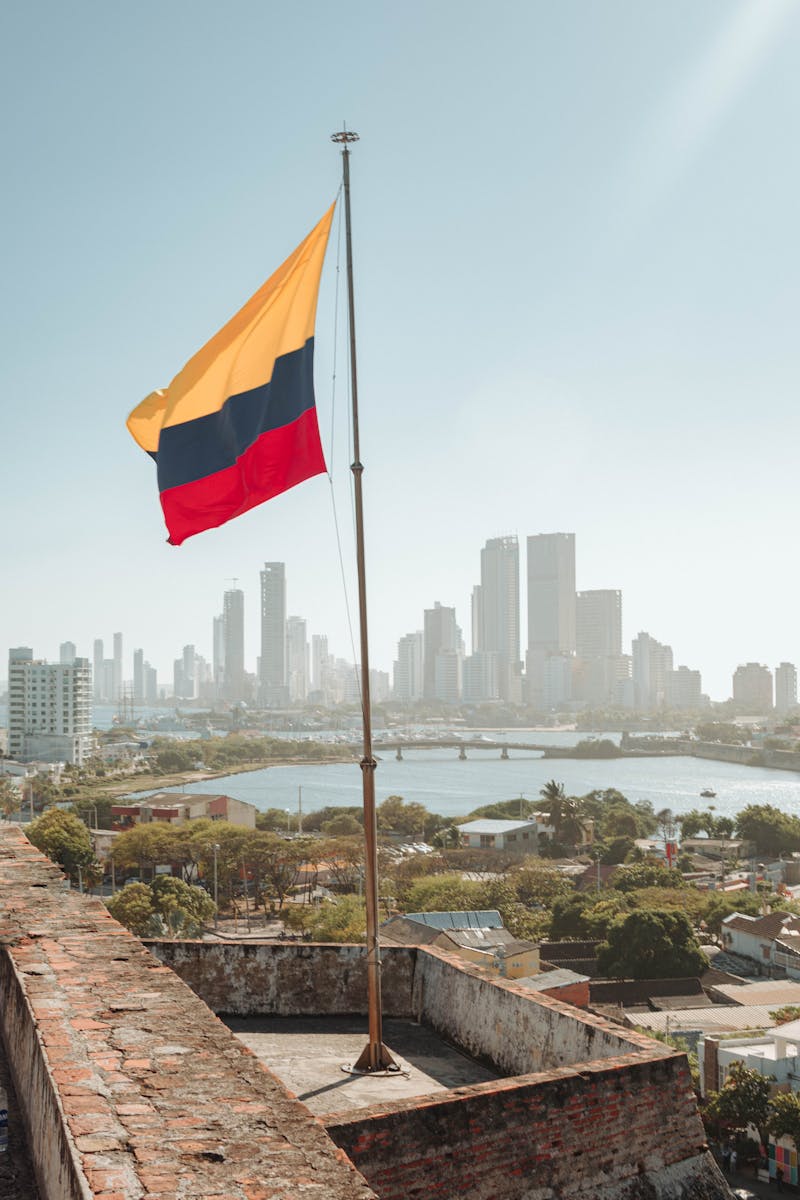
Most people picking a neighborhood in Cartagena do it wrong. They book an Airbnb in Bocagrande because it shows up first on every search, spend a week sweating through Zoom calls in a high-rise with intermittent AC, and conclude that Cartagena 'just isn't for working.' That's not Cartagena being hostile — that's the wrong neighborhood choice ruining a perfectly workable city.
Cartagena's neighborhoods are more distinct from each other than in most Colombian cities. Getsemaní and Bocagrande sit maybe a 10-minute walk apart and feel like different countries in terms of vibe, price point, and street-level experience. Internet in one building can hit 200 Mbps; the one next door peaks at 25. The choices matter here.
This guide covers every neighborhood worth considering if you plan to actually live and work in Cartagena — not just visit for a long weekend. I'll be honest about the downsides, specific about prices, and opinionated about who each area actually suits.
What to Think About Before You Pick
One factor shapes everything in Cartagena: the heat. Average temperatures run 28–35°C year-round with Caribbean humidity that pushes the 'feels like' reading even higher. There's no cool season, no escape. Your neighborhood choice needs to account for this in ways that don't apply to Medellín or Bogotá.
Specifically: air conditioning reliability matters more here than anywhere else in Colombia. Modern buildings in the right neighborhoods have good electrical infrastructure; older buildings in tourist areas often don't. Always ask about the building's AC setup and whether there's a backup generator before signing a lease.
Cartagena also lacks a metro or cable car system. Getting around means Uber, InDrive, or walking. If your daily life requires leaving your immediate area frequently, walkability becomes a real consideration — especially when it's 34°C at noon. Choose a neighborhood where your most-used shops and cafés are within 10 minutes on foot, or budget for daily rideshare costs.
📖 Keep Reading
Cartagena Living Guide: Cost, Neighborhoods & Expat Life
Our full guide covering cost of living, utilities, the heat factor, and what expat life in Cartagena actually looks like day-to-day.
Bocagrande — The Default Expat Zone
Bocagrande is where most expats land first, and for mostly good reasons. It's a long peninsula extending south from the old city, dense with supermarkets, pharmacies, gyms, and international restaurants. You can walk to Carulla, get Rappi delivery in under 20 minutes, and find a gym that actually has working equipment.
Internet infrastructure here is the best in the city. Modern buildings in Bocagrande have fiber from Claro or ETB, and 100–200 Mbps connections are standard in buildings constructed after 2012. Older buildings — anything that looks 1990s on the outside — are riskier. The apartments look fine but run on wiring that wasn't designed for modern internet loads. Always test before you commit.
Rent for a furnished 1-bedroom runs COP 2,500,000–4,500,000 per month (~$620–$1,120 USD). Furnished 2-bedrooms go for COP 3,500,000–6,500,000. If you're staying 6+ months, unfurnished drops prices 20–30% and is worth negotiating. You can browse available apartments at colombiamove.com/ciudad/cartagena/bocagrande — the map view shows you exactly which buildings are close to which streets.
The honest downside: Bocagrande feels anonymous. High-rises and car traffic, no real street life. You can live there three months and never learn your neighbor's name. It's comfortable and functional, but it doesn't have the character that makes somewhere feel like home. If that matters to you, read the Getsemaní section carefully before deciding.
Getsemaní — The One Worth the Tradeoff
Getsemaní has gone from 'approach with caution' to 'genuinely one of the most interesting neighborhoods in Colombia' in under a decade. The murals are everywhere — actual art by actual artists, not commissioned filler. The main plaza (Trinidad) has locals playing dominos most evenings, cumbia coming from somewhere, and the specific energy of a neighborhood that knows it's being watched but hasn't yet been sanitized for it.
For remote workers who want to feel embedded in the city rather than floating 18 floors above it, Getsemaní is the right call. The tradeoff is real: the neighborhood's edges — particularly toward Av. del Lago and the bus terminal — still have petty theft issues, especially after dark. In the core streets around Trinidad and Calle de la Sierpe, the vibe is fine and the foot traffic is constant enough for safety. Use the same awareness you'd apply anywhere in Colombia.
Internet has improved significantly — fiber reaches most of the neighborhood now — but building-level quality varies more than in Bocagrande. When viewing apartments, ask for a specific ISP name and run a speed test yourself. 'Buena señal' is not an answer. Rent for a furnished 1-bedroom runs COP 1,800,000–3,200,000 (~$445–$800), though well-renovated units near the plaza are approaching Bocagrande prices. Gentrification has been closing the gap.
Browse Getsemaní listings at colombiamove.com/ciudad/cartagena/getsemani.
El Laguito — Small and Often Overlooked
El Laguito is a thin strip at the southern tip of the Bocagrande peninsula, separated from the main area by a small lagoon. It's quieter, has some of the best restaurants in the city, and the beach on this end is calmer than the main Bocagrande beachfront. Internet infrastructure mirrors Bocagrande since it's on the same zone.
The trade-off is scale — it's genuinely small. If you want daily variety in your environment, you'll need to Uber north regularly. But for people who want somewhere calm to work and aren't easily bored by quiet routines, El Laguito is underrated. Rent runs slightly cheaper than Bocagrande for equivalent apartments: a furnished 1-bed around COP 2,200,000–3,800,000.
Castillogrande — Quiet, Residential, and More Expensive
Castillogrande sits beyond Bocagrande and El Laguito, and the vibe shifts immediately: wider streets, less density, more greenery, wealthier residents. Long-term expats and upper-middle-class Colombians tend to settle here. There's less walking distance, but what you trade in convenience you gain in calm — genuinely quiet in a way that Bocagrande never quite is.
Expect to pay 10–20% more than equivalent Bocagrande apartments. Buildings tend to be better maintained, and you're more likely to find apartments with proper outdoor space or parking. It's the right choice if the anonymous high-rise life of Bocagrande doesn't appeal and you're willing to Uber for most daily needs. The yacht club is nearby if nautical is your thing.
Manga — The Hidden Local Option
Manga appears on almost no expat guide, which is part of why it's worth mentioning. It's a residential island connected to the mainland by bridges, sitting just south of the old city. Rents are priced for Colombians, not tourists: a furnished 1-bedroom runs COP 1,500,000–2,800,000 — meaningfully cheaper than anywhere closer to the tourist corridor.
The feel is real Cartagena — local shops, neighbors who know each other, the kind of residential life that the old city pretends to offer but doesn't. Internet coverage has improved; fiber is available in most of the neighborhood. Older buildings lag behind, as always.
The honest limitation: nothing is walking distance. Groceries, restaurants, cafés, coworking — you're taking Uber for all of it. For remote workers who can structure their own days and don't need to spontaneously step out for coffee, Manga's pricing is compelling. For people who want the ability to wander on impulse, it'll feel isolating within a week.
El Centro Histórico — See It, Don't Sign a Lease
The walled city is genuinely one of the most beautiful places in the Americas. Colorful colonial buildings, cobblestones, the sea walls at sunset — it earns the hype visually. Spend your first week there in an Airbnb and soak it in. Then move somewhere you can actually work.
The practical reality: the old city is loud almost every night, even mid-week. Weekend nights are genuinely noisy until 2–3am. Apartment quality varies wildly — charming exterior, plumbing that dates from the 1970s, electrical wiring that can't run AC and a laptop simultaneously. Rent prices are tourist-inflated (COP 3,000,000–6,500,000 for a furnished 1-bed), and most of the grocery and service infrastructure that makes daily life easy is a taxi ride away.
Expats who make it work long-term in the old city are usually people who deeply love the aesthetic and can tolerate the noise as the price of admission. Most who try it are looking for a new apartment within four weeks. My honest recommendation: explore it constantly, just don't sleep there permanently.
Internet and Remote Work in Cartagena
The overall picture: Cartagena is workable for remote workers, with more caveats than Medellín or Bogotá. Claro and ETB provide fiber in Bocagrande, Getsemaní, and parts of Manga and Castillogrande. The building-level variance is the main issue — the neighborhood having fiber access doesn't mean your specific apartment is wired for it.
Practical rules: run a speed test on your phone during the apartment showing (fast.com works well). Under 50 Mbps for a video-call-heavy schedule is a risk. Under 25 Mbps is a problem. Have a mobile data backup — Claro's 4G/5G coverage across Cartagena is solid, and a 30+ GB plan runs COP 50,000–80,000/month. Worth having ready for building outages.
Coworking options are limited compared to Medellín. Selina Cartagena in Getsemaní is the main option — decent, not exceptional, around COP 60,000–80,000 per day. A few independent spaces have opened in Bocagrande. For cafés: Juan Valdez in Bocagrande is reliably fast and air-conditioned; some spots in Getsemaní have decent wifi but check before committing to a four-hour session.
For a full breakdown of Colombia's internet carriers, home fiber plans, and SIM options, see the complete carrier comparison guide.
One practical note on healthcare: Cartagena's private clinic infrastructure is good (Clínica Boca Grande and Clínica Universitaria San Juan de Dios are the main options), but if you're working abroad long-term, proper health coverage matters. SafetyWing's nomad health plan covers Colombia at rates significantly cheaper than trip insurance, and is worth having before a longer stay.
📖 Keep Reading
Best Beach Towns in Colombia for Expats & Digital Nomads
If Cartagena feels too urban or expensive, here are the coastal towns that work better for long-term living — from Santa Marta to Palomino.
🏙️ Browse Cartagena Apartments on Colombia Move
Filter by neighborhood, use the interactive map to see exactly where listings are, and message landlords directly — no commission, no agency fees.
Browse Cartagena Listings →Frequently Asked Questions
❓ Is Bocagrande or Getsemaní better for expats?
Depends on what you want. Bocagrande is more convenient, has better internet infrastructure, and is easier to navigate as a newcomer. Getsemaní has more character, lower rents, and is genuinely more interesting to live in — but has more security variability and less predictable internet per-building. Most expats end up in Bocagrande for practicality; the ones who stay longest often move to Getsemaní once they know what they're doing.
❓ What's the cheapest neighborhood in Cartagena for long-term rent?
Manga is consistently the cheapest area with a decent expat-friendly infrastructure. Furnished 1-bedrooms go for COP 1,500,000–2,800,000 ($375–$700). The trade-off is that nothing is walkable — you'll need Uber for daily errands. For a balance of price and walkability, Getsemaní's lower-end buildings offer reasonable rates without total isolation.
❓ Can you live in Cartagena on $1,000/month?
Yes, but it requires discipline. You'll need a mid-range apartment in Getsemaní or Manga (COP 1,800,000–2,500,000), cook most meals at home, and limit AC usage (electricity bills for full-day AC run COP 300,000–600,000/month). It's doable, but Cartagena is not as budget-friendly as Medellín — the tourist economy has inflated prices for many things. At $1,500/month you live very comfortably.
❓ Is internet reliable enough in Cartagena for remote work?
In the right building in Bocagrande or central Getsemaní — yes. The city-wide infrastructure has improved substantially, and fiber is widely available. The issue is building-level variance: always run a speed test before signing a lease, and keep a mobile data SIM as backup. Video calls and cloud-heavy workflows are fine at 50+ Mbps, which is achievable in most modern buildings.
❓ Which Cartagena neighborhoods are safest for foreigners?
Bocagrande, Castillogrande, and El Laguito are the most consistently low-crime areas. Getsemaní's core is generally safe, but exercise awareness on its edges and at night. El Centro Histórico has petty theft in tourist-heavy areas (pickpockets near the walls, the usual). Manga is quiet and safe but isolated. Avoid Crespo and areas near the bus terminal after dark.
Planning a move to Cartagena or still comparing it to other Colombian cities? Drop your questions in the comments — or if you want to see what's actually available to rent right now, the map at colombiamove.com/buscar lets you browse listings across all of Cartagena's neighborhoods with a visual overview of where things are.
🇨🇴
Join Colombia Move — free bilingual marketplace
Jobs, services, housing, classifieds. Free to post, no commissions, no middlemen.
Sign up free


Comments
Loading comments...