
Best Beach Towns in Colombia for Expats & Digital Nomads
Colombia's Caribbean coast has beach towns that are genuinely livable and far cheaper than comparable spots in Mexico or Southeast Asia. Here's the honest breakdown of each.

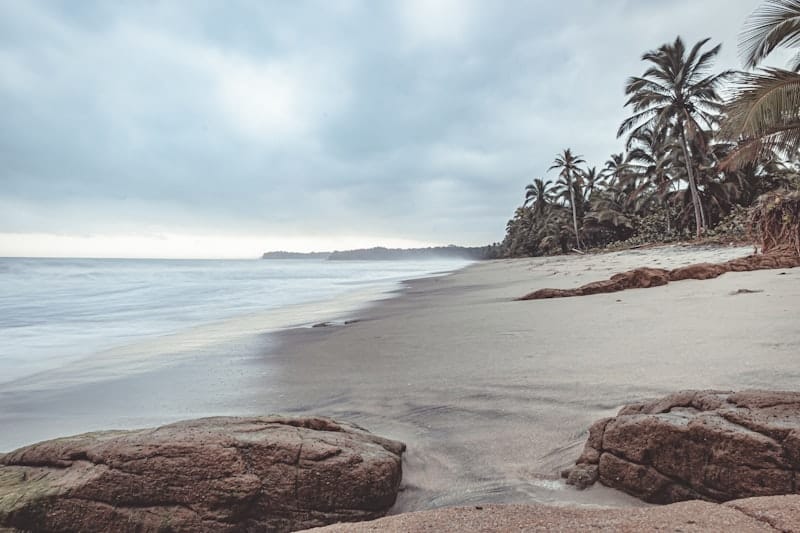
If you've done the Medellin thing, seen Bogota, and you're starting to wonder about the coast — good instinct. Colombia's Caribbean coast has beach towns that are genuinely livable, and most expats underestimate them. I spent a couple of months working from Santa Marta and bouncing between Palomino and Taganga, and the contrast with similar towns in Mexico or Thailand is striking: lower costs, less tourist inflation, and beaches that aren't mobbed year-round.
The tradeoff is infrastructure. Internet along the coast is improving fast but still uneven. Capurganá has no roads in. Taganga's WiFi is an adventure. And the heat — 30°C year-round on the Caribbean side — is either paradise or misery depending on your tolerance. So here's the honest breakdown: what each town is actually like, who it's good for, and what the remote-work situation really looks like.
This guide focuses on coastal living specifically. For inland cities, the full comparison is elsewhere.
Santa Marta — The Best All-Around Coastal Base
Santa Marta is the practical choice, and I mean that as a compliment. With a population around 600,000, it's a real city: fiber internet in most neighborhoods, coworking spaces, a functioning hospital, and Tayrona National Park 40 minutes away by taxi. If you want beach proximity without sacrificing basic livability, Santa Marta wins this list.
The nomad and expat community here has grown consistently. Neighborhoods like El Rodadero and the beachfront zone near the marina have solid high-speed coverage. Airbnbs with reliable 100+ Mbps run $600–900/month; furnished apartments found locally via Finca Raíz or Facebook Marketplace drop to $400–600. The city runs hot — 30°C average — but sea breezes help, and most livable apartments have AC.
The one honest downside: Santa Marta can feel like it's trying to be Cartagena without quite getting there. The colonial old city (Centro Histórico) is charming but compact. On a daily-life level it's more utilitarian than beautiful. That's fine if what you want is a functional beach base that doesn't drain your wallet on tourist restaurants.
Santa Marta Quick Facts
Monthly budget: $800–1,400 USD | Internet: reliable fiber available | Coworking: Selina + independent spaces | Tayrona entrance fee: ~80,000 COP (~$20 USD)
Taganga — Raw, Cheap, and Genuinely Lovely
A 10-minute taxi from Santa Marta drops you into a completely different world. Taganga is a fishing village that used to be Colombia's main backpacker dive hub — PADI courses here run $200–250 USD, among the cheapest anywhere — and has since mellowed into something quieter. The backpackers are still around, but so are long-term residents who seem to have gotten pleasantly stuck.
Be honest with yourself about why you're going. If you need reliable remote work internet, Taganga is not your answer — the infrastructure is genuinely patchy. But for diving, Spanish immersion, a month of low-cost coastal living (apartments $300–500/month), or just decompressing without a tourist price tag, it's hard to beat. Watching pelicans dive into the bay from a terrace above the water doesn't get old.
Palomino — The Sleeper on This List
Palomino sits about 90 minutes east of Santa Marta on the road toward La Guajira, and it has grown more in the past five years than any other town here. Where there were once three hostels and a dirt road, there are now quality guesthouses, proper restaurants, a small surf scene, and — critically — enough Starlink-backed accommodation that remote work is actually feasible if you vet your spot first.
The beach is long, wide, and rarely crowded. Tubing the Río Palomino (where the river meets the sea) is genuinely fun and costs about $10. Prices are very reasonable: $40–$80/night for a private room with AC, or $600–900/month for a decent longer-term arrangement. The vibe is slower and more authentic than Santa Marta, without Cartagena's tourist premium.
Honest limitation: after a few weeks, Palomino can feel small. The amenities are limited and you can only walk the same beach so many times before you want a city. For a month-long reset it's excellent. For a three-month remote work stint, rotating to Santa Marta for stretches makes sense.
San Andrés — Caribbean Island Life (With Real Caveats)
San Andrés is technically Colombia but feels like a different country. This small Caribbean island sits 700km off the Nicaraguan coast, surrounded by the kind of turquoise shallow water you've seen in every Caribbean screensaver. The local Raizal culture mixes Colombian, Afro-Caribbean, and English-speaking influences in a way that doesn't exist on the mainland. It's one of the most beautiful places in Colombia and criminally underrated by expats.
The caveats are real. San Andrés is more expensive than the mainland — almost everything is imported, and apartment prices reflect the limited land. Expect to pay $1,000–1,600/month for what you'd get for $700 in Santa Marta. The island's small size (about 27 km²) can feel claustrophobic over time. Internet has improved a lot and is now workable in most accommodations. For 1–3 months of genuine Caribbean island living — daily snorkeling, hammocks over the water, extraordinary seafood — it's absolutely worth the premium.
Rincón del Mar — The One Nobody Talks About
Rincón del Mar is on the Gulf of Morrosquillo, about 3 hours from Cartagena, and it almost never appears on expat radar. That's both the problem and the appeal. The beach is calm, shallow, and genuinely beautiful; there's a small reef just offshore. The town is local, quiet, and very affordable — monthly costs under $700 for a simple local lifestyle are realistic.
I'd recommend it specifically for retirees or anyone done with the expat social scene who just wants to live simply by the water. Internet is patchy (some places are fine, others aren't), English-speaking infrastructure is essentially nonexistent, and you'll need solid enough Spanish for daily logistics. Treat that as a feature if it matches what you're after.
Capurganá — Off-Grid Adventure, No Roads, No WiFi
Capurganá is as remote as you can get while staying in Colombia. There are no roads in — you arrive by boat from Turbo (2–3 hours) or a tiny prop plane. The jungle meets the Caribbean Sea here in a way that doesn't exist anywhere else on the coast: thick rainforest, coral reefs, empty beaches, some of Colombia's best diving.
Don't go expecting to work. Go for a week of proper digital detox: diving, hiking, doing nothing. It's one of Colombia's best-kept secrets and will stay that way as long as locals successfully resist the road that's been proposed for decades.
Internet & Coworking: The Honest Breakdown
Beach towns and reliable internet have a complicated relationship in Colombia. Here's the reality by location:
Santa Marta is the clear winner. Tigo, Claro, and ETB all have fiber in most urban neighborhoods — 200 Mbps for 80,000–120,000 COP/month (~$20–30 USD). Selina has a coworking location, and the café culture for laptop workers is decent. Palomino is hit-or-miss: ask specifically about internet before booking. San Andrés has improved significantly and is now workable in most spots. Taganga, Rincón del Mar, and Capurganá: plan around spotty connectivity, not through it.
Best backup solution regardless of location: get a local SIM or eSIM before heading to the coast. I use Saily for eSIMs — solid LTE coverage along the Santa Marta–Palomino corridor means your phone can serve as a hotspot when the hostel WiFi gives up.
If you're working on public or shared WiFi, use a VPN. NordVPN works fine even on slower coastal connections and costs under $4/month on an annual plan.
Which Beach Town Is Right for You?
Quick guide by type: remote worker needing reliable fiber → Santa Marta. Nomad on a month-long reset → Palomino (verify internet before booking). Retiree wanting affordable coastal life → Rincón del Mar or Santa Marta. Diving obsessive → Taganga or Capurganá. Caribbean island dreamer → San Andrés.
One thing worth sorting before you go: travel insurance. The nearest major hospital to Palomino or Capurganá is not close, and a scooter accident or diving incident in a remote town with no coverage is a genuinely bad situation. SafetyWing covers Colombia fully from ~$50/month — I'd consider it non-optional for remote beach towns.
🏥 Travel Insurance for the Colombian Coast
Hospital access is limited in remote beach towns like Capurganá and Palomino. SafetyWing Nomad Insurance covers Colombia from ~$50/month — worth having before you're somewhere without a road out.
Get SafetyWing Coverage →FAQ: Beach Towns in Colombia
❓ Do you need a different visa to live in Colombia's beach towns?
No — you use the same visa rules as anywhere in Colombia. Most foreigners enter on a tourist stamp (90 days, extendable to 180 days/year) or apply for a Digital Nomad Visa. Beach location doesn't change anything visa-wise.
❓ Is it safe to swim at Colombian Caribbean beaches?
Generally yes — the Caribbean side has calm, protected waters at most towns on this list. Tayrona National Park has restricted swimming areas (follow the signs; currents can be dangerous). Pacific beaches are a different story with frequent strong rip currents.
❓ How do I get from Medellin to Santa Marta or Palomino?
Fastest: fly to Santa Marta (SMR) from Medellin — about 1 hour, $40–80 USD on Avianca, Latam, or Wingo. Bus takes 12–14 hours and costs around $30. From Santa Marta, Palomino is 90 minutes by shared bus or taxi (about $5–10 USD).
❓ Can I work remotely from Palomino?
With the right accommodation, yes — for shorter stints. Some guesthouses run Starlink or dedicated fiber and can handle a full workday. Others are running on boosted mobile data that drops out in rain. Ask specifically before booking: 'do you have Starlink or fiber?' A SIM hotspot backup is recommended regardless.
❓ What's the best time of year to visit Colombia's Caribbean coast?
December through March is peak dry season and most reliable beach weather. July–August is also relatively dry. Rainy season runs roughly April–June and September–November. Avoid Semana Santa (Easter week) if you want any peace on popular beaches — the whole country heads to the coast.
If you've spent time on Colombia's Caribbean coast — as a nomad, retiree, or somewhere in between — I'd love to hear which town worked for you. Drop it in the comments below, and if this was useful, share it with whoever's been talking about moving somewhere with a view of the water.
🇨🇴
Get the next Colombia guide in your inbox
Join 10,000+ expats and future expats. No spam, just useful guides.





Comments
Loading comments...